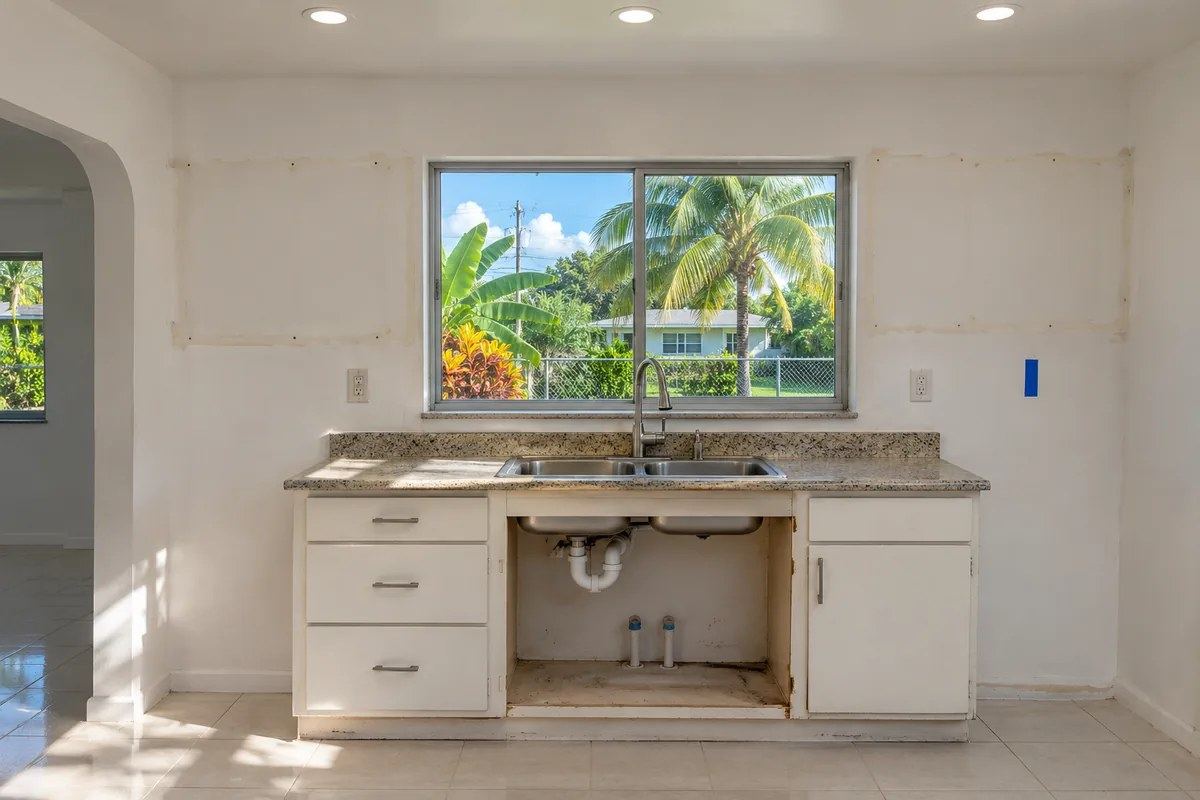
Two remodelers have walked through your kitchen this month. The first one says you'll need a permit and it could add weeks before anyone starts. The second one shrugs, says permits aren't required for a job like this, and would rather not pull one at all.
Now you're standing at the sink wondering which of them is right, and whether skipping the permit is the kind of thing that comes back on you when you sell. The answer depends on what's changing in the room, and in Miami it also depends on which building department covers your address.
The short answer first
Do I need a permit to remodel my kitchen in Miami?
In the City of Miami, replacing kitchen cabinets and countertops in a single-family house or duplex doesn't need a permit, as long as the plumbing lines, the wiring and the load-bearing walls stay as they are. Once the job moves the sink, adds an outlet, opens a wall or changes the layout, it needs a permit. Miami Beach, Miami Shores and unincorporated Miami-Dade run their own permitting, and condo units start with the association, so the rules shift with your address.
What you can change without a permit
The City of Miami keeps a list of work that doesn't need a permit, and replacing cabinets and countertops in a single-family home or duplex is on it, provided nothing behind them changes. That's the like-for-like job: the new base cabinet goes where the old one sat, the sink drops back onto the same drain, and the outlets stay on the same circuits.
Florida added another path in July 2026. The law known as HB 803 lets some small jobs on a single-family house, under $7,500, skip the building permit through a written exemption request. It doesn't cover any plumbing, electrical, mechanical, gas or structural work, and it doesn't apply to homes in a flood hazard area, so in a lot of Miami neighborhoods it won't help with a kitchen at all. Check your own address on FEMA's flood map before counting on it.
When a kitchen remodel needs a permit
The line is the moment someone has to cut pipe, run new wire or touch a wall that holds the house up. Moving the sink to the island means new supply and drain lines, so it needs a plumbing permit. A new outlet for a microwave or a dedicated circuit for an induction range needs an electrical one. Taking out the wall between the kitchen and the dining room turns it into a bigger home remodel with a building permit of its own, and if that wall is load-bearing, the job needs structural review as well.
That covers most of what people mean by a full remodel. In the core city, a lot of the houses in Little Havana, Little Haiti and Allapattah were built around 1960 out of concrete block, and opening a wall in a block house is a bigger job than it sounds. Our kitchen remodeling page has more on what a full Miami kitchen job involves.
Windows come into it too. Miami-Dade sits in the High-Velocity Hurricane Zone, so if the remodel replaces the window over the sink, that window needs a current Miami-Dade product approval, called an NOA, and it goes in with the permit. It's one of the reasons we treat windows as finish work inside a remodel and don't take on window replacement as a job by itself.
The city also has a small middle lane. Its Easy Permit program covers like-for-like fixture swaps, such as changing out a kitchen sink or a water heater, when a licensed contractor files it, with no plan review. A full kitchen remodel isn't eligible for it.
How the permit works in the City of Miami
Every building permit in the City of Miami starts online in the city's iBuild portal, and the drawings are reviewed in a separate system called ProjectDox. For kitchen and bath remodels, the city also runs Walk-Thru Express, a same-morning review held weekday mornings at the permit counter at 444 SW 2nd Avenue. You set the project up in iBuild and upload the drawings first, then bring it in for review.
Not every house qualifies. Homes in historic districts can't use Walk-Thru Express, which takes in Buena Vista East, South River Drive and Riverview in Little Havana, and Spring Garden. Neither can properties with open code violations, jobs that need structural review, or after-the-fact work to legalize something an earlier owner built without a permit. If your house has an old garage conversion or an enclosed back room nobody permitted, expect the standard review path, and ask the remodeler to look at the permit history before quoting a timeline.
Owner-builder permits exist for owner-occupied one- and two-family homes, so in a house you live in you can pull the permit yourself as your own contractor. That puts the responsibility for the work on you, which is worth thinking through before you take it on for anything involving plumbing or wiring.
Other cities, the county and condos
Miami Beach has its own building department, and it won't issue a permit for work inside a condo unit without an authorization letter from the association. If you're remodeling a unit on Miami Beach, get that letter moving first. Miami Shores runs its own building department as well, and homes in Princeton and the rest of unincorporated South Dade get their permits from Miami-Dade County rather than a city.
For a condo in Brickell or the Arts and Entertainment District, the building's rules come before the city's. Ask the property manager or the association what they require for kitchen work before you sign with anyone, since the condo's declaration and rules govern what you can do inside a unit. Don't assume the City of Miami requires an association letter the way Miami Beach does, but do assume the association will want to know.
What to say when a contractor says you don't need one
Sometimes they're right. If the job is only cabinets and counters in the same spots, with the sink back on the same drain, there may be nothing to file. Ask them to tell you exactly what's changing and what isn't, and if anything on that list involves plumbing, wiring or a wall, ask which permit they'll pull and whose name goes on it.
Florida law gives you one more check. A contractor who takes more than 10% of the price up front on a home job has to apply for the permits within 30 days of that payment, and our article on what to do when a contractor takes your deposit and stops answering covers what that rule means for you. Before you pay anything, look the contractor up on myfloridalicense.com, the state's license search.
Get the permit on the written quote as its own line, so you can see what it costs and who is handling it. Our guide to whether a $50k kitchen estimate is high covers what else a good kitchen quote should spell out, and our older piece on avoiding permit delays in Miami-Dade has more on keeping the application moving once it's filed. If you're only refacing the cabinets and leaving the boxes in place, our article on refacing or replacing kitchen cabinets is the better place to start.
Getting a remodeler to look at your kitchen
Miami Elite Remodeling doesn't do the work itself. We connect you with an independent remodeler who works in your area, and here's how that works. When you call, the ZIP code you enter is what finds a remodeler who covers your neighborhood, and a remodeler who works there should know whether your address falls under the city, Miami Beach, Miami Shores or the county before quoting the permit. Our kitchen remodeling page has more on planning the job, and if you'd rather write the details out first, you can send them through our estimate page.
Call (786) 627-5048 and we'll connect you with a remodeler who works in Miami. Press 1, then choose kitchen or bathroom and enter your ZIP code.