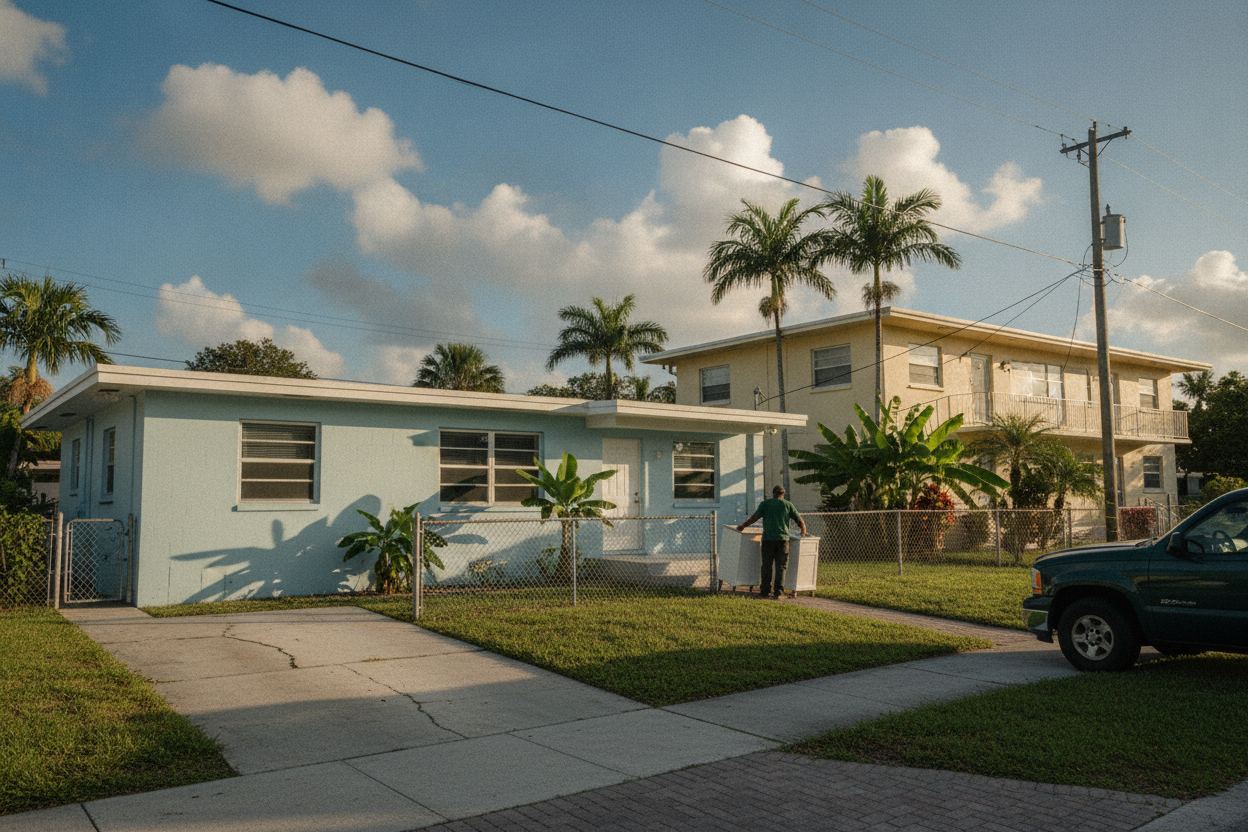
Walk-ups, bungalows and rooming houses
Half of the homes in 33135 were built before 1960. Beyond the apartment buildings, about 20% are detached houses and 9% are in buildings of two to four units.
The styles run older the closer you get to the river. The city's South River Drive Historic District holds pre-1915 frame buildings, likely built as rooming houses, plus four apartment buildings from the 1940s. A 2015 survey by a preservation coalition, as reported by NBC 6, found 1910s and 1920s bungalows, Mission and Mediterranean walk-ups from the 1920s and 1930s, and postwar garden apartments in East Little Havana.
Some early houses have stacked-plank wood walls, like the 1918 Little Havana House on SW 13th Court. The Westmoreland 1st Addition, platted in 1912, sold its lots at 60 to 65 feet wide and 130 feet deep, which gives you a sense of the older blocks.
Check the historic map before you file
You apply to the City of Miami online, in iBuild, the same as anywhere else in the city. What changes here is the list below.
- Fixture swaps. Replacing a toilet, tub, sink, shower or water heater, re-piping, and sewer or water service repairs can use the city's Easy Permit program, with a licensed contractor and no plan review.
- Faster review for remodels. Kitchen and bath remodels can usually go through Walk-Thru Express, but not in a historic district, so a building on South River Drive or in the Riverview district takes the longer path.
- Doing it yourself. Owner-builder permits are only for owner-occupied one- and two-family homes. A bungalow or duplex you live in qualifies. A walk-up doesn't.
- Historic buildings. Exterior changes to a contributing building, like new windows, need a Certificate of Appropriateness on top of the permit.
The South River Drive district covers the 400 blocks of SW 1st and SW 2nd Streets and the 100 block of SW South River Drive. The Riverview Historic District is a small area in East Little Havana. Individually designated landmarks include the Tower Theater, Prince Edward Court Apartments and the Hubbard House. For zoning on any lot, use the city's GIS Zoning Tool.
Mostly X, with an AE strip by the river
Most of the points FEMA's map shows along Calle Ocho, Flagler and the inland streets sampled as zone X. Near the Miami River it's different: SW 1st Street at SW 5th Avenue and NW 1st Street at NW 12th Avenue both came back as AE, with a base flood elevation of 9 feet. Your address may differ, so check FEMA's map.
A Miami Herald analysis said a Category 4 storm could push surge up the Miami River "all the way to Hialeah," which would pass the river edge of the neighborhood.
In a flood zone, the 50% rule applies: once the work reaches half the building's market value, not counting land, the building has to meet current flood code. An older building with a low assessed value gets there faster. The city also wants a detailed contract with a cost breakdown and an affidavit from the architect of record.
What's different in Little Havana
- Landlords are the typical client. With fewer than one in four homes owner-occupied in 33135, many jobs are unit turnovers, and the work has to fit around tenants.
- Recertification is part of owning a walk-up. Miami-Dade's building recertification covers everything except houses, duplexes and very small buildings, and once a building is on the cycle it's inspected every 10 years. The city's Unsafe Structures Section runs it.
- Some of the city's earliest frame buildings. The city calls the South River Drive group "Miami's oldest surviving group of Frame Vernacular resources."
- National attention without new rules. The National Trust put Little Havana on its 11 Most Endangered Historic Places list in 2015 and named it a National Treasure in 2017. Neither one adds legal review to your permit.
The housing here is about the same age as Allapattah's. If you own across the river in West Brickell, see Brickell.
Jobs landlords and homeowners call about here
- Kitchen remodeling: turning over a dated unit kitchen between leases.
- Bathroom remodeling: replacing a 1950s bath, galvanized pipes and all.
- Home remodeling: reworking a 1920s bungalow or a whole small building.
- Countertops: durable tops that hold up to tenant wear.
- Kitchen cabinets: matching cabinets across several units so repairs stay simple.
- Flooring: tile laid over old slab or wood floors in a pre-war building.
Questions people ask
My building is from the 1950s. Does it still need inspections?
If it's bigger than a duplex and over 2,000 square feet, it's likely in Miami-Dade's recertification program, which repeats every 10 years. Ask the city's Unsafe Structures Section where your building is on the schedule.
How do I know if my house is in a historic district?
Check the city's historic district list and its designated sites. The South River Drive and Riverview districts are both in Little Havana. Inside either one, changing the outside of a building takes a sign-off from the city's preservation staff or board.
Can I get my kitchen permit the same morning?
In much of Little Havana, a kitchen or bath remodel can use Walk-Thru Express. It's not available in a historic district, or when there's an open violation or old unpermitted work being legalized.
Can I pull the permit myself on my duplex?
If you live in it, yes, the city allows owner-builder permits on owner-occupied one- and two-family homes. For a building with more units, you'll need a licensed contractor.
Turn the unit over without the surprises
Call (786) 627-5048 and we'll connect you with a remodeler who works in Miami. Press 1, then choose kitchen or bathroom and enter your ZIP code. Doing several units? Mention it when the remodeler calls back.