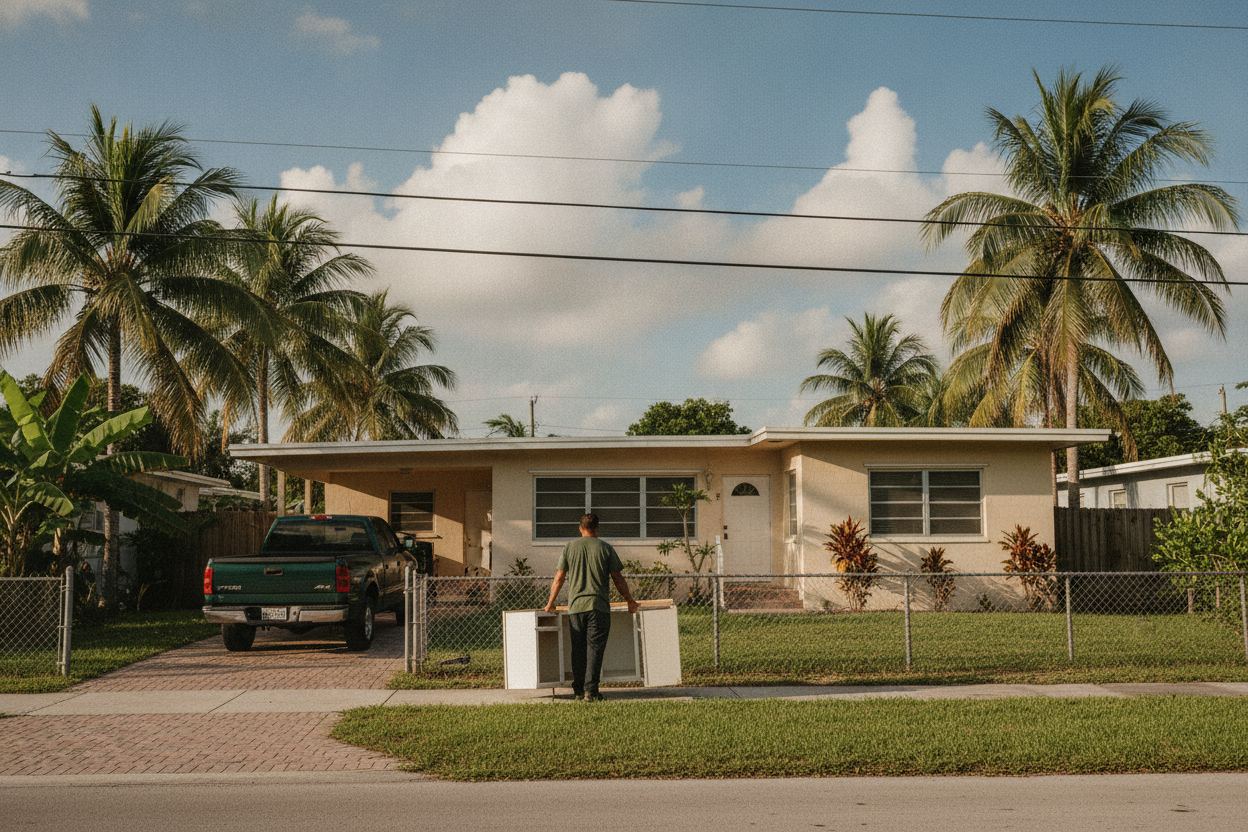
Mid-century ranches and bayside condos
North Miami is a split city. Census estimates show about 41% of homes are single-family houses, 28% are in buildings of 50 or more units and about 23% are in buildings of 10 to 49 units. About 43.5% are owner-occupied. ZIP code 33181, on the bay side, is mostly large buildings, while 33161 is close to half single-family.
By the Census median, half the homes are older than 1967 and half are newer. A quarter went up in the 1950s, another 19% in the 1960s and nearly 24% in the 1970s. Homes from before 1950 are scarce, at about 11.6%.
Real-estate sources describe Keystone Point as roughly 880 single-family homes on canal-separated peninsulas, mostly from the 1950s and 1960s, and Alhambra Heights as inland homes from the same era. East of the Biscayne Canal, the city describes the soil as soft and mucky with a higher water table, which matters if your plans include an addition.
Permits from the City of North Miami
The City of North Miami has its own Building Department at 12340 NE 8th Avenue, phone 305-895-9820. Applications go through the city's E-Services portal.
Here's the detail that shapes a kitchen or bath job: the city allows digital submittal for small interior renovations such as kitchens and bathrooms, plus stand-alone plumbing, electrical, window, door and roof permits. Additions and new construction have to be filed in person. Owner-builders can't use digital submittal at all. Applications must be notarized and list the estimated job cost and the contractor.
If your home is in a Special Flood Hazard Area, you may also need an Elevation Certificate and a separate Floodplain Development Permit under Chapter 8.5 of the City Code.
Then there's the sale. When a single-family home, condo unit, duplex or triplex in North Miami is sold, the city requires a Certificate of Re-Occupancy before title transfers. The inspection checks that the home is still used as built, and the city warns that what inspectors see can lead to code enforcement for work done without permits. Permitting the remodel now means one less thing for that inspection to find.
Tidal creeks, king tides and the 45% line
Four tidal waterways run through the city: Arch Creek, Little Arch Creek, the Biscayne Canal and the Oleta River, all draining to Biscayne Bay. The city says heavy rain or high tide can push them and nearby storm drains over their banks, and that some neighborhoods flood even on sunny days during king tide season, which it lists as September through November.
Parts of North Miami are in a Special Flood Hazard Area and parts aren't. The city offers an address lookup through its Forerunner flood portal, and FEMA's flood map shows the same thing, so check your own address before planning.
In a flood zone, new or substantially improved buildings need the lowest floor at least 1 foot above the base flood elevation, with AC units and water heaters elevated or floodproofed. The trigger is the city's 45% threshold, which also applies after non-flood damage such as a fire or a windstorm. Sellers of improved property in a flood zone must also put a bold flood disclosure in the sale contract.
How North Miami differs from its neighbors
- A 45% trigger. Five points lower than the figure most homeowners know, and it's the number that decides how far a big remodel can go.
- A re-occupancy inspection at every sale. Unpermitted kitchen and bath work tends to surface when you sell, so permitting it now saves trouble later.
- Online permits for kitchens and baths, in person for additions. And owner-builders file in person no matter what.
- No city historic board. North Miami falls under Miami-Dade County's preservation program, which covers a handful of designated sites like the 1929 William Lyman Phillips House on NE 129th Street.
- Two kinds of ground. Sandy soil that drains better west of the Biscayne Canal, and mucky soil with a higher water table east of it.
Picking the right service for a North Miami home
- Kitchen remodeling: a ranch-house kitchen permitted online, priced against the 45% line if you're in a flood zone.
- Bathroom remodeling: bath remodels done with a permit, so there's nothing unpermitted for the re-occupancy inspector to note.
- Home remodeling: bigger renovations and additions, which the city wants filed in person.
- Countertops: new counters for a 1950s or 1960s kitchen getting its first real update.
- Kitchen cabinets: new cabinets for canal-side and inland homes alike.
- Flooring: floors chosen with the flood zone in mind if your lot sits in one.
Questions people ask
Is it true North Miami's substantial improvement rule is 45%?
Yes. The city's flood guide uses 45% of the building's market value, not 50%. Cross it in a flood zone and the house has to meet full floodplain rules.
Can I pull my own kitchen permit online in North Miami?
Not as an owner-builder. The city's digital submittal is open for small interior renovations like kitchens and baths, but owner-builders have to file in person.
Will an old unpermitted bathroom cause trouble when I sell?
It can. Every sale needs a Certificate of Re-Occupancy, and the city warns that conditions inspectors see can lead to code enforcement for work without permits.
How do I find out my North Miami flood zone?
Use the city's Forerunner flood portal or FEMA's flood map and type in your address. It shows the zone and the base flood elevation for your property.
Find out where your project lands against the 45% line
Call (786) 627-5048 and we'll connect you with a remodeler who works in Miami. Press 1, then choose kitchen or bathroom and enter your ZIP code.