
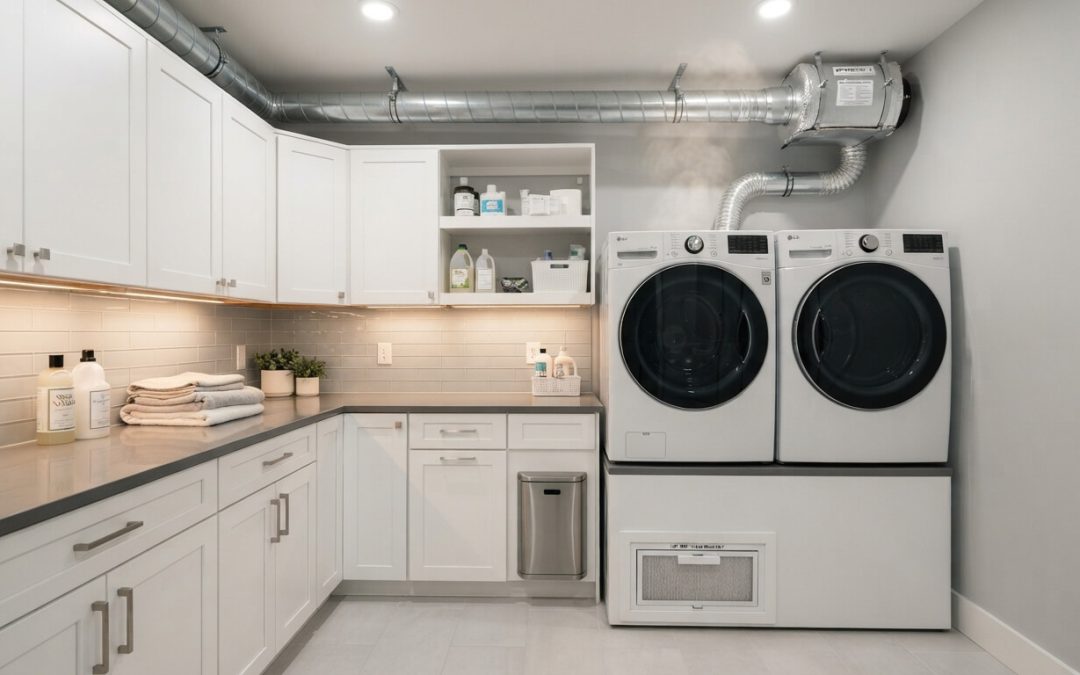
Proper ventilation and lint management are essential for fire safety and efficiency in your laundry room remodel. Make sure to choose the right venting system, like vented or ventless dryers, based on your space. Clean the lint filter after each load and inspect the vent duct annually to prevent buildup. Look out for signs like musty odors and longer drying times, which indicate ventilation issues. There’s more to effectively enhance your laundry space’s safety and efficiency.
The Importance of Proper Ventilation
When you neglect proper ventilation in your laundry room, you risk creating a breeding ground for mold and mildew. Stale air can accumulate, leading to unpleasant odors and potential health issues.
You want to guarantee that moisture from washing and drying cycles evaporates efficiently. A well-ventilated space helps regulate temperature, preventing overheating of appliances and reducing energy costs.
Additionally, proper airflow minimizes lint buildup, which can pose a fire hazard. Don’t underestimate the importance of ventilation; it not only promotes a healthier environment but also extends the lifespan of your appliances.
Prioritize ventilation for a safe and efficient laundry experience.
Types of Venting Systems for Dryers
There are three main types of venting systems for dryers: vented, ventless, and hybrid.
Vented dryers expel hot, moist air outside your home through ducts, providing efficient drying and preventing humidity build-up.
Ventless dryers, on the other hand, use a heat exchanger to recycle air, condensing moisture into water that you can drain or collect, making them ideal for small spaces without external venting options.
Hybrid systems combine both methods, offering flexibility for various settings.
Each type has its advantages, so consider your space and drying needs when choosing the best option for your laundry room.
Best Practices for Lint Management
Effective lint management is essential for maintaining dryer efficiency and safety in your laundry room.
To start, clean the lint filter after every load; this simple step boosts airflow and reduces fire risks.
Make it a habit to inspect and clean the vent duct at least once a year, ensuring no blockages are present. Additionally, consider using a vent cleaning brush for thorough maintenance.
You should also avoid overloading your dryer, as this can lead to increased lint production.
Finally, keep the area around your dryer clear of clutter to improve ventilation and minimize lint buildup.
Stay safe and efficient!
Signs of Poor Ventilation and Lint Buildup
If you notice your clothes taking longer to dry or a musty smell in your laundry room, these could be signs of poor ventilation and lint buildup.
Check for increased humidity or condensation on windows and walls, as this indicates inadequate airflow. You might also see lint accumulating around your dryer vent or notice that the vent flap isn’t opening properly during operation.
Additionally, if your dryer feels excessively hot to the touch, that’s a red flag. Ignoring these signs can lead to fire hazards and decreased efficiency, so it’s essential to address them promptly.
Stay vigilant for these warning signs.
Enhancing Safety and Efficiency in Your Laundry Room
To enhance safety and efficiency in your laundry room, start by ensuring proper ventilation and regular lint maintenance.
Install a quality exhaust fan to improve air circulation, reducing humidity and preventing mold growth. Make it a habit to clean your lint trap after every load and check the ductwork for blockages.
Consider upgrading to a metal vent, as it’s less prone to fire hazards. Additionally, keep your laundry area clutter-free to avoid accidents.
Frequently Asked Questions
How Often Should I Clean My Dryer Vent?
You should clean your dryer vent at least once a year.
If you notice reduced drying efficiency or a burning smell, clean it more often.
Regular maintenance keeps your dryer safe and efficient.
Can I Vent My Dryer Into the Attic?
You can’t vent your dryer into the attic.
It creates a fire hazard and builds up moisture, leading to mold.
Always vent your dryer outside for safety and efficiency to guarantee proper airflow and prevent issues.
What Materials Are Best for Dryer Ducting?
For dryer ducting, use rigid metal ducts, preferably aluminum or galvanized steel.
They resist lint buildup and withstand high temperatures.
Avoid plastic or flexible ducts, as they can pose fire hazards and reduce efficiency.
Are There Specific Lint Traps for Different Dryers?
Yes, there are specific lint traps designed for different dryer models.
They vary in size and fit, so you should check your dryer’s specifications to make certain you’re using the right trap for peak performance.
How Can I Tell if My Dryer Vent Is Blocked?
You can tell if your dryer vent is blocked by checking for poor drying performance, excessive lint buildup around the vent, or unusual noises.
Also, feel for warm air escaping from the vent outside.
Conclusion
In conclusion, prioritizing proper ventilation and effective lint management in your laundry room remodel not only boosts efficiency but also significantly enhances fire safety. By choosing the right venting system and staying vigilant for signs of lint buildup, you can create a safer, more functional space. Don’t overlook these essential aspects—taking the time to implement best practices now will pay off in the long run, keeping your home safe and your laundry routine running smoothly.
