
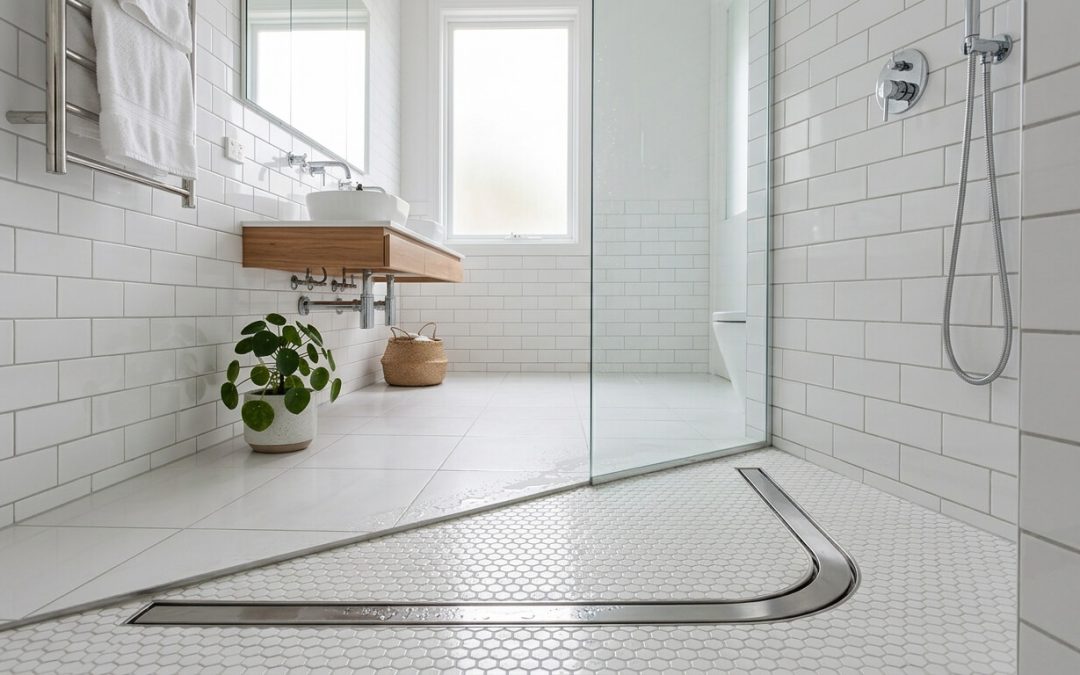
Proper drain slope and plumbing layout are key to a successful bathroom renovation. Aim for a slope of 1/4 inch per foot to guarantee effective drainage and prevent issues like standing water or clogs. It’s crucial to map your plumbing layout carefully, minimizing bends and using the right pipe sizes. Regular maintenance can help avoid common drainage problems. Stick around, and you’ll uncover more insights to elevate your renovation project!
Importance of Drain Slope in Bathroom Design
When designing a bathroom, understanding the importance of drain slope is essential for effective plumbing. A proper drain slope guarantees that water flows smoothly toward the drain, preventing standing water and clogs.
Ideally, you should aim for a slope of 1/4 inch per foot. This angle helps maintain efficient drainage, which can save you from costly repairs down the line. Without the right slope, you risk leaks and water damage, creating a less sanitary environment.
Understanding Plumbing Layout Basics
A solid understanding of plumbing layout basics is essential for guaranteeing your bathroom functions effectively.
Start by mapping out the location of fixtures like sinks, toilets, and showers. Consider the flow of water and waste to minimize bends and turns in pipes. Use the right pipe sizes to avoid clogs and maintain pressure.
Verify your water supply lines are separate from drain lines to prevent backflow issues. Keep in mind that venting is critical for proper drainage.
You’ll want to maintain clear access to plumbing for future repairs. A thoughtful layout can save you time and money in the long run.
Recommended Drainage Slope Angles
To guarantee effective drainage in your bathroom, it’s essential to adhere to recommended slope angles for your pipes.
Ideally, a slope of 1/4 inch per foot is standard for drain lines, which allows water to flow smoothly without pooling. For larger pipes, like those used for toilets, a slope of 1/8 inch per foot may suffice.
Always remember to maintain these angles throughout your plumbing layout. Proper slope not only prevents blockages but also enhances the longevity of your plumbing system.
Common Drainage Issues and Solutions
Even with the right drainage slope, common issues can still arise in bathroom plumbing. Clogs often occur due to hair, soap residue, and debris buildup. You can tackle this by regularly cleaning your drains and using a drain strainer.
Slow drainage might signal a more serious blockage; a plumbing snake can help clear it. If you notice foul odors, it could indicate a venting issue or a dry trap; check and refill your traps as needed.
Finally, leaking pipes can lead to water damage; replace damaged sections promptly to prevent further issues and maintain a healthy bathroom environment.
Tips for Collaborating With Plumbing Professionals
When you’re planning a bathroom renovation or repair, collaborating with plumbing professionals can make the process smoother and more efficient.
Start by clearly communicating your vision and specific needs. Provide them with any existing layouts or designs to guarantee everyone’s on the same page.
Be open to their suggestions, as they bring valuable expertise to the table. Schedule regular check-ins to discuss progress and address any concerns promptly.
Finally, establish a budget and timeline upfront to avoid misunderstandings.
Frequently Asked Questions
How Can I Identify Existing Drain Slope Issues?
You can identify existing drain slope issues by observing water pooling, slow drainage, or unusual odors.
Check for visible dips or irregularities in the flooring and test drainage by running water and watching its flow.
What Materials Are Best for Bathroom Drainage Systems?
For bathroom drainage systems, you’ll want to use PVC or ABS pipes for durability and corrosion resistance.
Also, consider installing high-quality drains and traps to prevent clogs and guarantee efficient water flow.
Can I Modify My Bathroom Layout Without Affecting Drainage?
Yes, you can modify your bathroom layout without affecting drainage, but you’ll need to guarantee that new fixtures align properly with existing pipes.
Consulting a plumber might help you avoid costly mistakes and guarantee efficiency.
How Often Should I Inspect My Bathroom Drains?
You should inspect your bathroom drains at least once a year.
Look for clogs, leaks, or unusual odors.
Regular checks help maintain a healthy plumbing system and prevent costly repairs down the line.
Are There Specific Codes for Bathroom Drain Installation?
Yes, there are specific codes for bathroom drain installation.
You should check local building codes and regulations, as they vary by location.
Adhering to these codes guarantees proper drainage and compliance with safety standards.
Conclusion
Incorporating proper drain slope and an effective plumbing layout is crucial for a successful bathroom renovation. By understanding the importance of drainage angles and collaborating with plumbing professionals, you can avoid common issues and ensure a functional space. Remember, a well-designed bathroom not only enhances your daily routine but also adds value to your home. So, take the time to plan carefully and enjoy the benefits of your beautifully renovated bathroom!
