
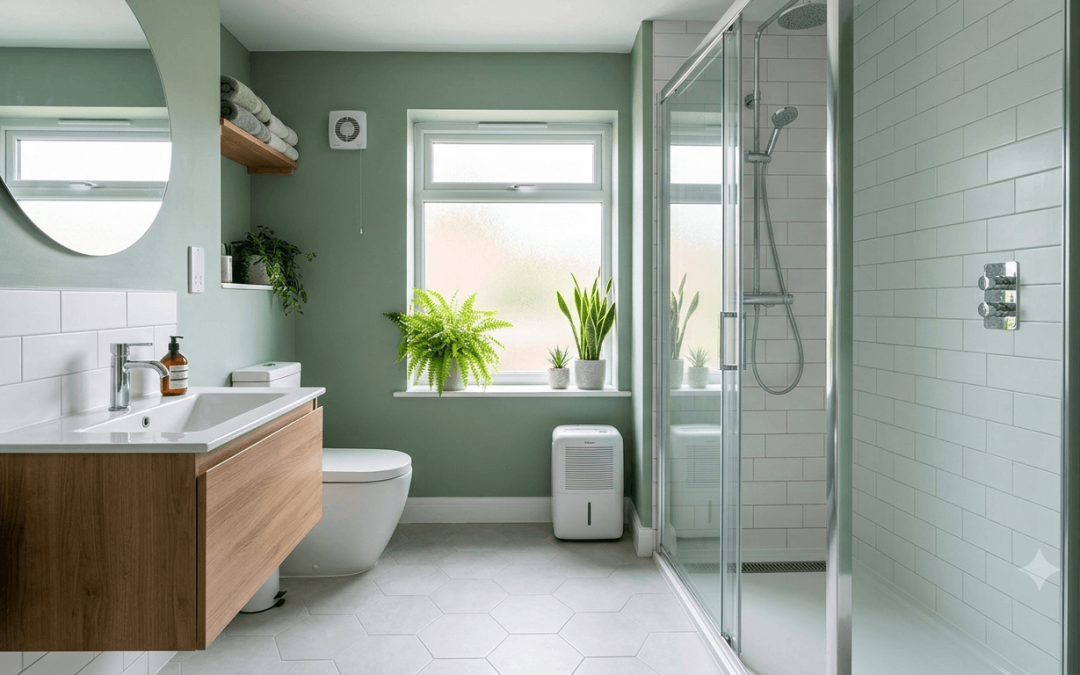
To prevent mold regrowth after a bathroom renovation in humid climates, start by using mold-resistant materials like treated drywall and low-porosity tiles. Guarantee proper ventilation with exhaust fans and open windows to maintain airflow. Keep humidity levels between 30% and 50% by using dehumidifiers when needed. Regularly clean surfaces and apply mold inhibitors like mildew-resistant caulk. These steps can create a healthier environment—stick around to learn more about maintaining a mold-free bathroom.
Choose Mold-Resistant Materials
When you’re renovating your bathroom, choosing mold-resistant materials is essential to preventing future issues.
Start with mold-resistant drywall, as it’s specially treated to resist moisture. Opt for tiles with low porosity, ensuring water won’t seep through. Use a mold-resistant grout to seal joints effectively.
When selecting paint, go for a high-quality, mildew-resistant formula to protect your walls. Don’t forget about fixtures; choose materials like fiberglass or acrylic for durability and moisture resistance.
Ensure Proper Ventilation
To keep mold at bay after your bathroom renovation, guaranteeing proper ventilation is essential.
Start by installing an exhaust fan that effectively removes moisture and stale air. Make sure it’s vented to the outside, not just into the attic.
If possible, open windows during and after showers to allow fresh air to circulate. Consider adding vents or louvered doors to maintain airflow.
Regularly check and clean your ventilation system to guarantee it operates efficiently.
You’ll also want to keep the bathroom door slightly ajar when not in use, allowing excess humidity to escape and reducing the chances of mold growth.
Maintain Optimal Humidity Levels
Maintaining ideal humidity levels is vital for preventing mold regrowth in your newly renovated bathroom. Aim to keep indoor humidity between 30% and 50%. You can use a hygrometer to monitor these levels effectively.
If humidity rises, consider using a dehumidifier or air conditioner to help balance it out. After showers, open windows or run exhaust fans to quickly reduce moisture.
If you notice persistent dampness, it’s essential to address leaks or water accumulation immediately. By managing humidity, you create an environment that discourages mold, ensuring your bathroom stays fresh and mold-free for longer.
Regular Cleaning and Maintenance
While it may be tempting to let cleaning slide after your bathroom renovation, regular cleaning and maintenance are essential for preventing mold regrowth.
Make it a habit to wipe down surfaces like countertops, tiles, and fixtures at least once a week. Pay special attention to areas prone to moisture, such as around the shower and sink.
Use a squeegee after showers to reduce water buildup. Don’t forget to clean your exhaust fan and check for any leaks regularly.
Keeping your bathroom tidy not only enhances its appearance but also creates an inhospitable environment for mold, ensuring your renovation lasts longer.
Utilize Mold Inhibitors and Treatments
Even after your bathroom renovation, you can effectively combat mold by utilizing mold inhibitors and treatments.
Start by applying a high-quality mold-resistant primer and paint on walls and ceilings. These products create a barrier against moisture and mold growth.
Consider using mildew-resistant caulk around tubs and sinks, ensuring a tight seal that prevents water accumulation.
You can also incorporate mold-inhibiting sprays on surfaces as a preventive measure.
Regularly check for leaks and fix them immediately, as damp areas invite mold.
Frequently Asked Questions
How Can I Identify Mold Before It Becomes a Problem?
You can identify mold by regularly inspecting damp areas, checking for discoloration, musty odors, and observing any water leaks.
If you spot any signs, address them immediately to prevent further growth and damage.
What Are the Signs of Hidden Mold Growth?
You’ll notice signs of hidden mold growth through a musty odor, water stains on walls or ceilings, peeling paint, and dampness.
Check areas like behind appliances, under sinks, or in poorly ventilated spaces regularly.
Are There Specific Plants That Help Reduce Bathroom Humidity?
Yes, certain plants like peace lilies, spider plants, and Boston ferns help reduce humidity in your bathroom.
They absorb moisture and improve air quality, making your space feel fresher and less prone to mold.
How Often Should I Inspect My Bathroom for Mold?
You should inspect your bathroom for mold at least once a month.
Check areas prone to moisture, like corners, under sinks, and behind the toilet.
Regular inspections help you catch any issues before they escalate.
Can I Use Essential Oils as a Mold Deterrent?
Yes, you can use essential oils as a mold deterrent.
Oils like tea tree, lavender, and eucalyptus have antifungal properties.
Mix them with water in a spray bottle and apply regularly to help keep mold at bay.
Conclusion
To prevent mold regrowth after your bathroom renovation in humid climates, focus on using mold-resistant materials and ensuring proper ventilation. Keep humidity levels in check and commit to regular cleaning and maintenance. Don’t forget to apply mold inhibitors and treatments for added protection. By following these steps, you’ll create a healthier bathroom environment that stays fresh and mold-free for years to come. Enjoy your renovated space without the worry of mold creeping back in!
