
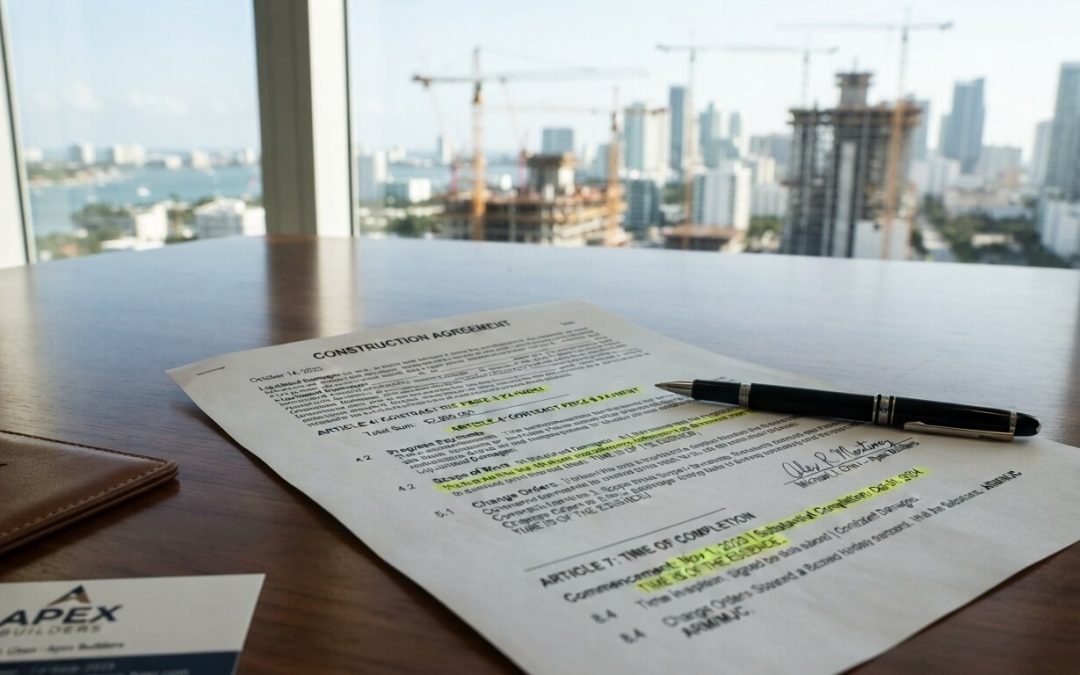
When dealing with Miami construction contracts, you might overlook key clauses like the scope of work, payment terms, and change orders. It’s essential to specify tasks clearly, understand payment schedules, and document any changes to avoid disputes. Warranties protect your investment, while termination clauses define how to exit a contract if issues arise. Familiarizing yourself with these aspects will help safeguard your project. There’s much more to explore on this topic to guarantee a successful construction experience.
Scope of Work and Specifications
When you enter into a construction contract in Miami, defining the scope of work and specifications is essential. This section outlines what tasks the contractor will perform and the quality standards expected.
Clearly detail the materials, designs, and timelines to avoid misunderstandings later. Include specifics like dimensions, finishes, and any required permits.
When you’re precise in your descriptions, you minimize the risk of disputes, ensuring both parties understand their responsibilities.
Remember, a well-defined scope helps keep your project on track and within budget.
Don’t underestimate the importance of this step; it sets the foundation for a successful construction experience.
Payment Terms and Schedule
Understanding payment terms and schedules is essential for both you and your contractor, as it guarantees everyone knows when and how much will be paid throughout the project.
You’ll typically encounter a schedule that outlines deposit amounts, progress payments, and final payments. Be certain to clarify when these payments are due, such as after specific milestones or upon completion of certain phases.
It’s also important to discuss acceptable payment methods and any penalties for late payments. By establishing clear terms, you protect your investment and foster a transparent relationship with your contractor, reducing the potential for misunderstandings down the line.
Change Order Procedures
Change orders are an essential part of the construction process, as they address any modifications to the original contract.
When you need changes, it’s important to follow the established procedures. First, document the requested changes in writing, including details on scope, cost, and time implications.
Next, submit this request to your contractor for review. They’ll assess the impact and provide you with an updated estimate.
Once both parties agree, sign the change order to formalize it.
Warranties and Guarantees
While the construction process often focuses on timelines and budgets, warranties and guarantees play an essential role in protecting your investment.
These clauses guarantee that the work meets specific standards and can cover repairs or replacements if issues arise. You’ll want to pay attention to the duration of these warranties, as they can vary considerably.
Most contractors offer a one-year warranty on labor, while materials may have longer guarantees from manufacturers. Always read the fine print, and don’t hesitate to ask questions.
Understanding these protections can save you time, money, and stress down the line, so make them a priority.
Termination Clauses and Dispute Resolution
When you’re managing a construction project, having clear termination clauses and dispute resolution processes in place is essential for protecting your interests.
Termination clauses outline the conditions under which either party can end the contract, whether due to non-performance, delays, or other issues. Make certain you understand these terms to avoid unexpected costs.
Dispute resolution mechanisms, like mediation or arbitration, provide structured ways to resolve conflicts without resorting to costly litigation. Knowing your options helps maintain control and guarantees you’re prepared should disagreements arise.
Always review these sections carefully before signing to safeguard your investment and peace of mind.
Frequently Asked Questions
What Happens if the Contractor Fails to Meet Deadlines?
If the contractor fails to meet deadlines, you can typically seek remedies outlined in your contract, including penalties, potential termination, or seeking damages.
Always document delays and communicate with the contractor to address issues promptly.
Are There Penalties for Late Payments?
Yes, there are penalties for late payments.
You might face late fees or interest charges, which can increase your overall project cost.
It’s essential to understand your contract’s specific terms regarding payment deadlines and penalties.
Can I Make Changes After the Project Starts?
Yes, you can make changes after the project starts, but you’ll likely need to follow specific procedures.
Discuss any modifications with your contractor, as they may affect timelines and costs.
Keep communication open throughout the process.
How Is the Final Inspection Conducted?
The final inspection’s conducted by a qualified inspector who checks your project against local codes and regulations.
You’ll want to be present to address any issues or concerns that might arise during the inspection.
What Should I Do if I Notice Defects After Completion?
If you notice defects after completion, document the issues with photos, notify your contractor immediately, and review your contract for warranty and repair clauses.
Be proactive to guarantee timely resolution of the problems you’ve identified.
Conclusion
In Miami construction contracts, it’s crucial to pay attention to often-overlooked clauses. By understanding the scope of work, payment terms, change order procedures, warranties, and termination clauses, you can protect yourself and ensure a smoother project. Don’t leave anything to chance—review your contract in detail and ask questions if something isn’t clear. Being proactive now can save you time, money, and stress down the line. Stay informed and safeguard your investment!
