
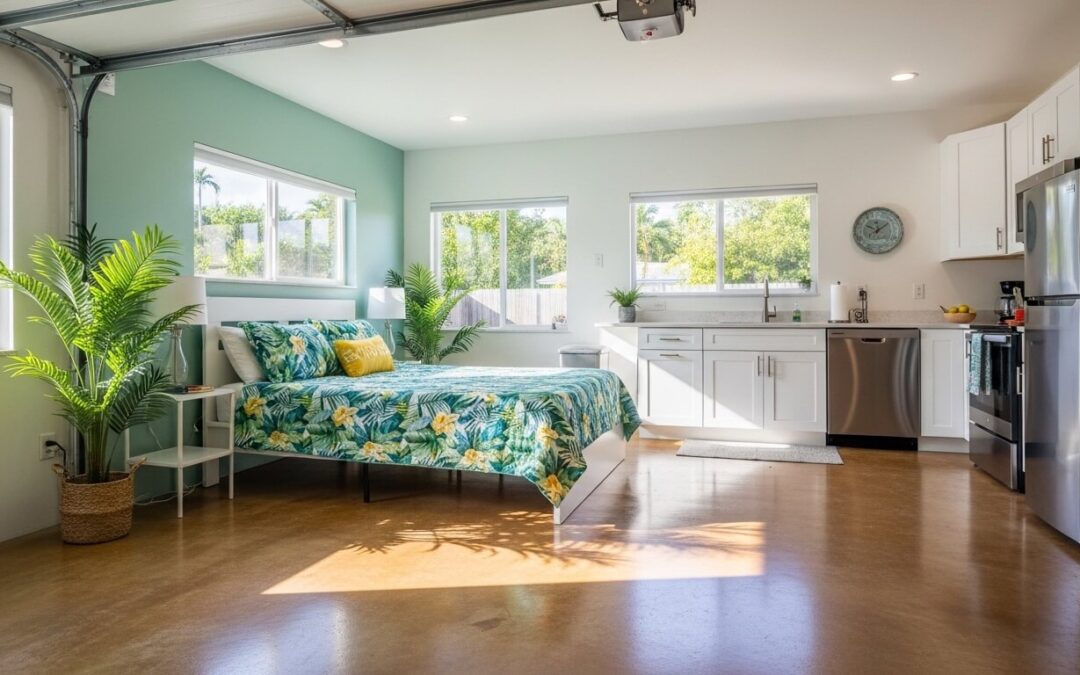
To turn your Miami garage into a legal rental unit, you need to start by checking local zoning laws and regulations. Next, obtain the necessary permits, such as building and electrical permits. Essential renovations include adding insulation, upgrading plumbing, and ensuring proper ventilation. Once your space is ready, set it up with basic amenities for tenants. Finally, market your unit effectively to attract renters. There’s more to cover, so keep exploring what steps you need to take next.
Understanding Zoning Laws and Regulations
Before you plunge into transforming your garage into a rental unit, it’s essential to understand zoning laws and regulations.
These laws dictate how properties can be used in your area, and they vary considerably. You’ll want to check if your garage can be legally converted into a living space.
Investigate local ordinances regarding minimum square footage, occupancy limits, and safety standards.
Contact your local zoning office or explore their website to gather the necessary information.
Ignoring these regulations could lead to fines or forced removal of your rental unit, so make sure you’re well-informed before proceeding.
Obtaining the Necessary Permits
Once you’ve confirmed that your garage can be converted into a rental unit, the next step is securing the necessary permits.
Start by visiting your local building department to understand what’s required. You’ll likely need a building permit, electrical permit, and possibly plumbing permits, depending on the renovations.
Prepare to submit plans that detail your conversion, and make certain they meet local codes. Don’t forget to check for any inspections needed during the process.
Obtaining these permits can take time, so plan accordingly. Once you have all approvals, you’re one step closer to transforming your garage into a legal rental unit.
Essential Renovations for Compliance
To guarantee your garage meets code requirements as a rental unit, you’ll need to focus on several essential renovations.
Start by adding insulation and drywall to create a comfortable living space. Install proper electrical wiring and sufficient outlets to meet tenant needs.
Upgrade plumbing if you’re adding a bathroom or kitchen area, guaranteeing all connections comply with local codes.
Don’t forget to include adequate ventilation and emergency exits, such as windows or doors.
Finally, make sure that your heating and cooling systems are functional and up to code, creating a safe and inviting environment for future tenants.
Setting Up the Space for Tenants
After confirming your garage meets all code requirements, it’s time to focus on setting up the space for your tenants.
Start by creating a cozy living environment. Invest in basic furniture like a bed, table, and chairs. Make sure to provide adequate storage solutions to keep things organized.
Next, verify proper lighting and ventilation—consider adding curtains for privacy. A kitchenette with a mini-fridge, microwave, and sink can enhance convenience.
Don’t forget to include essential amenities like Wi-Fi and air conditioning.
Finally, add some personal touches, like artwork or plants, to make the space feel inviting and homey.
Marketing Your New Rental Unit
As you prepare to rent out your newly converted garage, effective marketing is essential for attracting the right tenants.
Start by taking high-quality photos that showcase the space’s best features. Craft a compelling listing description that highlights amenities, nearby attractions, and unique aspects of your unit.
Utilize online platforms like Zillow, Craigslist, or social media to reach a wider audience. Don’t forget to share your listing with friends and family—they might know someone looking for a rental!
Consider hosting an open house to give potential tenants a firsthand look at your new rental.
Good luck with your marketing efforts!
Frequently Asked Questions
How Do I Calculate Rental Pricing for My Garage Unit?
To calculate rental pricing for your garage unit, research similar rentals in your area, consider your garage’s size and amenities, and factor in local demand.
Adjust your price to stay competitive while ensuring profitability.
Can I Use the Garage as a Short-Term Rental?
Yes, you can use your garage as a short-term rental, but check local zoning laws and regulations first.
Make sure you comply with any licensing requirements to avoid potential fines or legal issues.
Are There Specific Safety Inspections Required for Garage Rentals?
Yes, you’ll need to guarantee your garage meets safety regulations, which typically include fire inspections, electrical checks, and structural assessments.
Always consult local authorities to confirm specific requirements for rental properties in your area.
What Utilities Should I Provide for Tenants?
You should provide essential utilities like electricity, water, and possibly gas.
Consider including internet access and heating or cooling systems, ensuring your tenants have a comfortable living environment that meets their needs.
How Can I Handle Tenant Disputes Legally?
You can handle tenant disputes legally by documenting everything, communicating clearly, and following your lease terms.
If issues persist, consider mediation or consult a lawyer to guarantee you’re complying with local laws and regulations.
Conclusion
Turning your Miami garage into a legal rental unit can be a rewarding venture. By understanding local zoning laws, obtaining the right permits, and making necessary renovations, you’ll create a compliant and inviting space for tenants. Don’t forget to market your new unit effectively to attract renters. With careful planning and execution, you’ll not only enhance your property’s value but also generate extra income. So, get started on your journey to becoming a successful landlord!
