
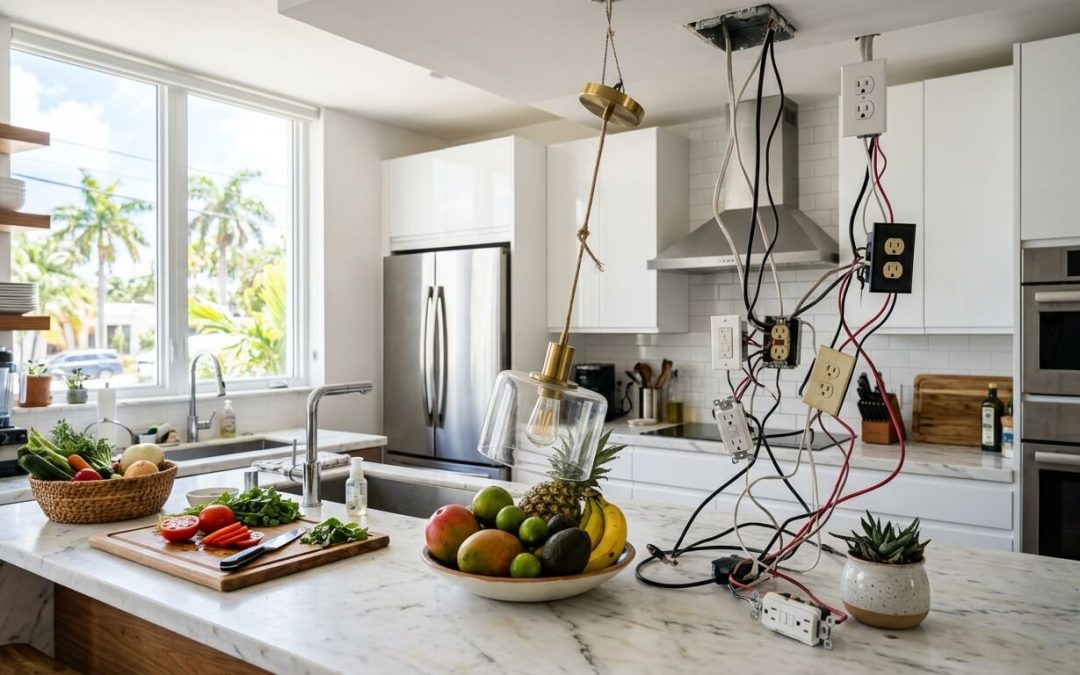
Many Miami homeowners overlook essential details in electrical load planning during kitchen remodels. You might ignore the power requirements of new appliances, leading to tripped breakers. Underestimating the number of outlets can force you to rely on extension cords, which is unsafe. Also, failing to take into account future upgrades can leave you in the lurch. Finally, don’t forget GFCI and AFCI requirements for safety. There’s much more to reflect on for a successful remodel—keep going to learn how to avoid these pitfalls!
Ignoring the Power Requirements of New Appliances
When you’re remodeling your kitchen, it’s essential not to overlook the power requirements of new appliances. Each appliance has specific voltage and amperage needs that can strain your electrical system if you’re not careful.
Failing to account for these requirements can lead to tripped breakers or, worse, electrical fires. Before purchasing, check the specs and consult an electrician to guarantee your home can handle the load.
You might need to upgrade your circuit or wiring. Proper planning now can save you headaches later, making sure your kitchen operates safely and efficiently with all your modern conveniences.
Underestimating the Number of Outlets Needed
Many homeowners underestimate the number of outlets needed in a kitchen remodel, leading to frustration down the line.
You might think a few outlets will suffice, but kitchens are bustling spaces with multiple appliances, gadgets, and devices. Consider your coffee maker, toaster, blender, and any future additions you might want.
It’s essential to plan for more outlets than you currently think you need. Installing additional outlets during your remodel can save you from using extension cords and create a safer environment.
Aim for convenience and efficiency by ensuring your kitchen is equipped with enough outlets to handle your daily needs.
Failing to Account for Future Upgrades
While you might’ve a clear vision for your kitchen remodel, overlooking potential future upgrades can lead to costly adjustments down the line.
You may plan for the appliances and features you want now, but what about those smart home devices or additional appliances you might want later? Not considering these upgrades can result in inadequate wiring or insufficient power capacity.
It’s essential to think ahead and design your electrical layout with flexibility in mind. By anticipating your future needs, you’ll save yourself the hassle and expense of retrofitting your kitchen just to accommodate new technology or appliances down the road.
Overlooking GFCI and AFCI Requirements
Failing to plan for future upgrades can also lead to oversights in safety regulations, particularly regarding Ground Fault Circuit Interrupter (GFCI) and Arc Fault Circuit Interrupter (AFCI) requirements.
In your kitchen remodel, it’s vital to install GFCI outlets in areas prone to moisture, like near sinks. These devices protect against electrical shocks.
Additionally, AFCI breakers are necessary for preventing electrical fires by detecting dangerous arcs in wiring. Ignoring these requirements couldn’t only jeopardize safety but also violate local codes.
Prioritizing GFCI and AFCI installations guarantees a safe, compliant kitchen that meets today’s electrical standards.
Not Consulting a Professional Electrician
When planning your kitchen remodel, consulting a professional electrician is vital to guarantee a safe and efficient electrical system.
Many homeowners underestimate the complexity of electrical load planning, leading to potential hazards. Without expert guidance, you might overlook essential factors like circuit capacity or appliance requirements, which could result in overloading circuits or insufficient power supply.
A professional can assess your current system, recommend upgrades, and confirm compliance with local codes.
Don’t risk costly mistakes or safety violations; investing in a qualified electrician now can save you headaches down the road and create a kitchen that meets your needs and exceeds expectations.
Frequently Asked Questions
How Can I Determine My Kitchen’s Current Electrical Capacity?
To determine your kitchen’s current electrical capacity, check your circuit breaker panel for amperage ratings, inspect existing wiring, and consider using a multimeter to measure voltage.
You might also consult a licensed electrician for expert advice.
What Are the Signs of Inadequate Electrical Load in Kitchens?
You’ll notice signs like flickering lights, tripped breakers, and appliances that struggle to run simultaneously.
If you’re experiencing these issues, it’s likely your kitchen’s electrical load isn’t adequate for your needs.
Are There Specific Code Requirements for Kitchen Electrical Installations?
Yes, there are specific code requirements for kitchen electrical installations.
You need to guarantee proper outlets, dedicated circuits for major appliances, and GFCI protection near water sources to comply with safety standards.
Always check local codes!
How Can I Safely Test Outlets for Adequate Power Supply?
To safely test outlets for adequate power supply, use a multimeter or voltage tester.
Plug it into the outlet, and check for correct voltage readings.
If it’s inconsistent, consult a professional electrician for assistance.
What Are Common Mistakes Homeowners Make With Kitchen Lighting Circuits?
Homeowners often underestimate the importance of proper circuit planning, overloading circuits with too many fixtures, or neglecting to balance lighting with dimmers.
You should also avoid mixing different wattages, which can lead to safety hazards.
Conclusion
In your kitchen remodel, don’t make the common mistakes many Miami homeowners do. Always consider the power requirements of new appliances and plan for enough outlets to accommodate future upgrades. Remember to adhere to GFCI and AFCI regulations for safety. Finally, consulting a professional electrician can save you time, money, and headaches down the road. By being proactive and informed, you’ll create a functional and safe kitchen that meets your needs now and in the future.
