
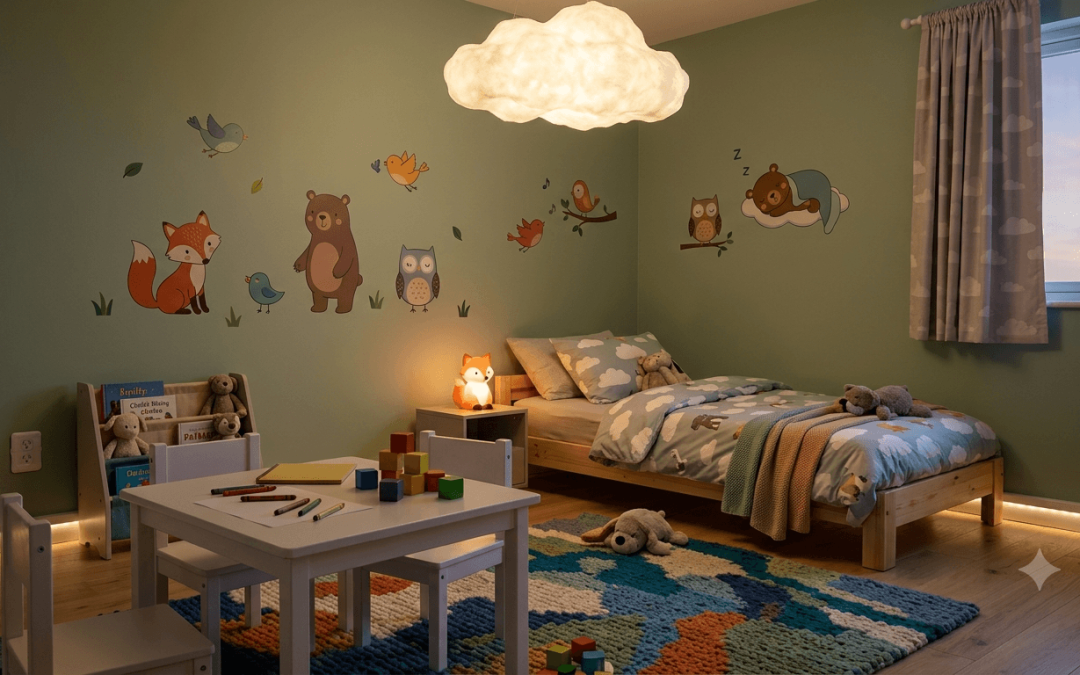
When planning electrical and lighting solutions for your child’s bedroom, prioritize safety. Install tamper-resistant outlets and ground fault circuit interrupters (GFCIs) in damp areas. Position outlets at least 12 inches above the floor and use adjustable lighting like dimmer switches to create a cozy atmosphere. Guarantee light switches are accessible for little hands and educate your children about electrical safety. By focusing on these elements, you’ll create a secure and inviting space for your child to enjoy. Discover more tips for a safe renovation.
Understanding Electrical Safety Standards for Kids’ Rooms
When planning electrical layouts for your child’s bedroom, it’s essential to understand the safety standards that protect them from potential hazards.
First, make sure all outlets are at least 12 inches above the floor to prevent accidental contact. Use circuits with a Ground Fault Circuit Interrupter (GFCI) to minimize shock risks in areas near water.
Additionally, avoid overloading circuits by distributing electrical loads wisely. It’s also wise to position cords and power strips out of reach, preventing tripping hazards.
Finally, always consult local building codes and consider hiring a licensed electrician to guarantee everything meets safety regulations for your child’s safety.
Choosing Tamper-Resistant Outlets and Switches
To enhance safety in your child’s bedroom, choosing tamper-resistant outlets and switches is essential.
These outlets are designed to prevent accidental insertion of objects, reducing the risk of electrical shocks. When selecting switches, opt for those with a childproof feature, ensuring your little ones can’t easily turn them on or off.
Installing these safety measures not only protects your children but also gives you peace of mind. Make sure to use outlets in accessible locations, enabling your child to plug in devices safely.
With tamper-resistant options, you’re taking an important step in creating a secure environment for your child.
Safe Lighting Solutions: Brightness and Placement
While creating a comfortable and safe atmosphere in your child’s bedroom, it’s essential to take into account both brightness and placement of lighting fixtures. Aim for soft, warm lighting that promotes relaxation, avoiding harsh, bright lights that can be overwhelming.
Place fixtures at different heights to provide varied lighting options—overhead lights for general illumination and bedside lamps for reading. Think about using wall sconces to save space and prevent accidents.
Make sure that light switches are easily accessible, allowing your child to control their environment. Thoughtful placement helps create a cozy, inviting space where your child feels secure and comfortable.
Incorporating Dimmer Switches and Adjustable Lighting
Incorporating dimmer switches and adjustable lighting can transform your child’s bedroom into a versatile space that adapts to different activities and moods.
With dimmers, you can create a cozy atmosphere for bedtime stories or energetic lighting for playtime. Adjustable fixtures allow you to focus light where it’s needed, whether for homework or creative projects.
Plus, giving your child some control over their lighting helps foster independence and personal expression.
Consider installing a combination of ceiling lights, table lamps, and wall sconces to enhance flexibility.
With thoughtful lighting, their bedroom becomes a safe haven for relaxation and creativity.
Educating Children About Electrical Safety in Their Space
How can you guarantee your child stays safe around electrical outlets and devices in their bedroom?
Start by teaching them the basics of electrical safety. Explain that outlets aren’t toys and should only be used for plugs, not fingers or objects.
Show them how to unplug devices when they’re not in use. Encourage them to report any frayed cords or malfunctioning devices immediately.
Use safety covers for outlets, and model safe behavior with electronics.
Regularly remind them about the dangers of water near electrical items.
Instilling these habits early can help your child create a safer space and make informed choices.
Frequently Asked Questions
What Color Temperature Is Best for Children’s Bedroom Lighting?
For children’s bedroom lighting, a color temperature between 2700K and 3000K is best.
This warm light creates a cozy atmosphere, promotes relaxation, and helps your child feel comfortable and secure during bedtime routines.
How Can I Hide Electrical Cords Safely?
You can hide electrical cords safely by using cord covers, adhesive clips, or cable management boxes.
Make certain cords are secured out of reach, and consider routing them along walls or behind furniture for a neat appearance.
Are LED Lights Safe for Kids’ Rooms?
Yes, LED lights are generally safe for kids’ rooms.
They produce less heat, reducing fire risks, and use lower voltage.
Just make sure they’re installed securely and out of reach to prevent accidents.
Regularly check for any damage.
What Should I Do if My Child Touches an Outlet?
If your child touches an outlet, calmly intervene and remove their hand.
Explain the danger clearly.
Consider installing outlet covers or safety plugs to prevent future incidents, ensuring a safer environment for your child.
How Often Should I Check Electrical Safety in Kids’ Rooms?
You should check electrical safety in your kids’ rooms at least once a month.
Regularly inspect outlets, cords, and fixtures for any damage or hazards to guarantee a safe environment for your children.
Conclusion
By prioritizing electrical safety in your children’s bedrooms, you create a secure and inviting space for them to grow and explore. Choosing tamper-resistant outlets, smart lighting solutions, and incorporating dimmer switches ensures their room is both functional and safe. Don’t forget to educate your kids about electrical safety, helping them understand the importance of respecting their environment. With these considerations in mind, you can confidently move forward with your renovations, knowing you’re protecting your little ones.
