
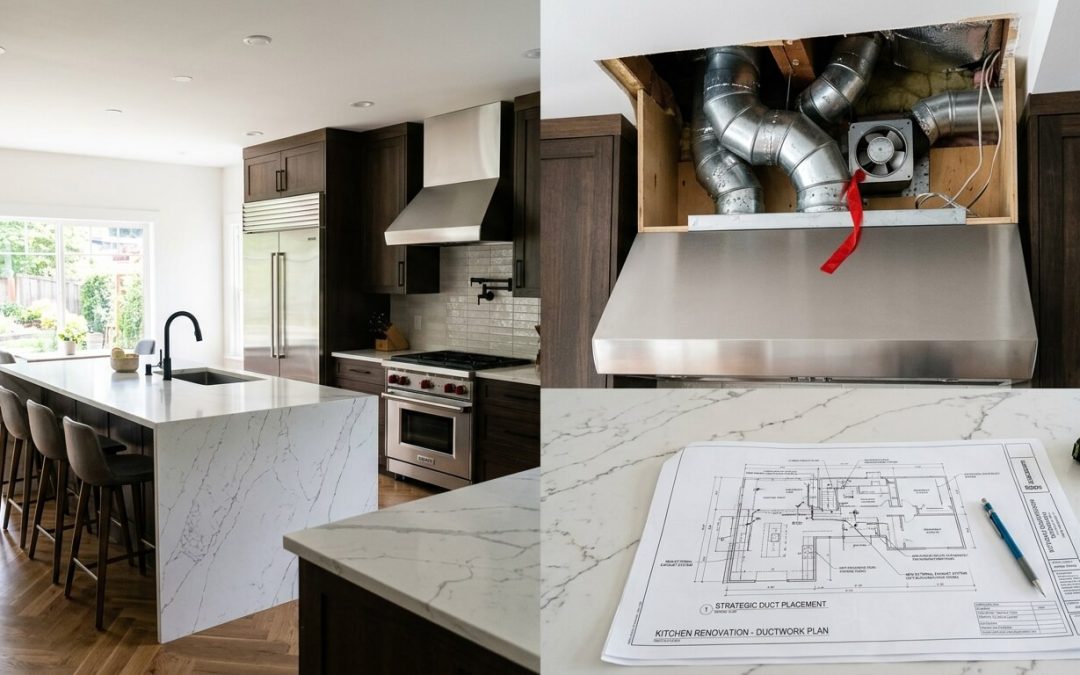
Hidden ventilation issues in kitchen remodels can seriously affect air quality and safety. You might find inadequate ductwork, misaligned exhaust fans, or even obstructions from cabinetry. These problems lead to persistent odors, humidity, and greasy surfaces. To fix this, make sure you install a properly sized range hood vented outside and regularly maintain your ventilation systems. Taking these steps can make your kitchen more comfortable and functional. Discover effective solutions to avoid ventilation headaches in the future!
Understanding the Importance of Kitchen Ventilation
When you remodel your kitchen, understanding the importance of ventilation is essential for both safety and comfort. Proper ventilation helps eliminate smoke, odors, and excess moisture, creating a healthier environment.
It also prevents grease buildup, which can lead to fire hazards. By installing an effective range hood or exhaust fan, you make certain that airborne contaminants are efficiently removed.
Good ventilation improves air quality and keeps your kitchen cooler while you cook. Don’t underestimate the role of windows and airflow; they can greatly enhance your kitchen experience.
Prioritize ventilation in your remodel to enjoy a safe, comfortable, and functional cooking space.
Common Hidden Ventilation Issues
Although you might think your kitchen remodel addresses all ventilation needs, several common hidden issues can undermine its effectiveness.
One major problem is inadequate ductwork; if your ducts are too small or poorly routed, airflow suffers. Misaligned exhaust fans also create issues, preventing smoke and odors from escaping.
Additionally, obstructions like furniture or cabinetry can block air paths, compromising ventilation. You might overlook the importance of fresh air intake, which keeps air circulating and reduces humidity.
Finally, using a recirculating hood instead of a vented one limits your kitchen’s ability to eliminate pollutants effectively.
Address these issues for ideal ventilation.
Signs of Poor Ventilation in Your Kitchen
If you’ve noticed persistent odors, increased humidity, or excessive heat in your kitchen, you might be dealing with poor ventilation.
Look for signs like condensation on windows, which indicates high moisture levels. Greasy residue on surfaces can also suggest inadequate airflow, as it doesn’t dissipate properly.
You may find mold or mildew growth, especially in corners or under sinks, signaling trapped moisture. If cooking smoke lingers longer than usual or you feel stuffy while working in the kitchen, these are red flags.
Recognizing these signs early can help you address the issue before it worsens.
Solutions to Improve Kitchen Airflow
Addressing poor ventilation in your kitchen is crucial for creating a comfortable cooking environment.
Start by installing a high-quality range hood that effectively captures smoke and odors. Make sure it vents outside, rather than circulating air back into the kitchen.
Consider adding exhaust fans or opening windows while cooking to improve airflow. You might also want to rearrange your kitchen layout for better air circulation, keeping appliances spaced apart.
Incorporating ceiling fans can help distribute air more evenly.
Finally, regularly clean or replace filters in your ventilation systems to maintain efficiency and guarantee fresh air flows freely throughout your kitchen.
Preventing Future Ventilation Problems
To prevent future ventilation problems in your kitchen, it’s essential to take proactive measures during your remodel.
First, verify your range hood is appropriately sized and vented outside; don’t just recirculate air. Consider installing a dedicated make-up air system if your kitchen’s airtight.
Always check ductwork for obstructions or sharp bends that can impede airflow. Use high-quality materials that can withstand humidity and heat.
Additionally, regular maintenance—like cleaning filters and ducts—can help keep your system running smoothly.
Finally, consult with a professional to evaluate your ventilation needs and avoid potential issues down the line.
Frequently Asked Questions
How Can I Assess My Current Kitchen Ventilation System’s Effectiveness?
To assess your kitchen ventilation system‘s effectiveness, check airflow by running the fan and feeling for strong drafts.
Inspect for obstructions, clean filters, and verify it meets local building codes for peak performance.
What Are the Best Materials for Ductwork in Kitchen Ventilation?
The best materials for ductwork in kitchen ventilation are galvanized steel, aluminum, and flexible ducting.
Galvanized steel offers durability.
Aluminum is lightweight and easy to install, while flexible ducting provides versatility for tight spaces.
Can I Install a Ventilation System Myself, or Should I Hire a Professional?
You can install a ventilation system yourself if you’re comfortable with DIY projects, but hiring a professional guarantees proper installation and compliance with local codes.
It might save you time and potential future headaches.
How Often Should I Clean My Kitchen’s Ventilation System?
You should clean your kitchen’s ventilation system every three to six months.
Regular maintenance helps guarantee efficient airflow and prevents grease buildup.
Don’t forget to check filters and ducts for peak performance!
Are There Specific Building Codes for Kitchen Ventilation I Should Know?
Yes, there are specific building codes for kitchen ventilation, and they vary by location.
You should check your local regulations to verify compliance, focusing on airflow requirements, duct sizes, and clearances for safety and efficiency.
Conclusion
In conclusion, ensuring proper kitchen ventilation is crucial for both your health and the longevity of your home. By recognizing common hidden issues and addressing them proactively, you can create a healthier cooking environment. Keep an eye out for signs of poor airflow, and don’t hesitate to implement the solutions we’ve discussed. By taking these steps, you’ll not only enhance your kitchen’s efficiency but also prevent future ventilation problems. Happy cooking!
