
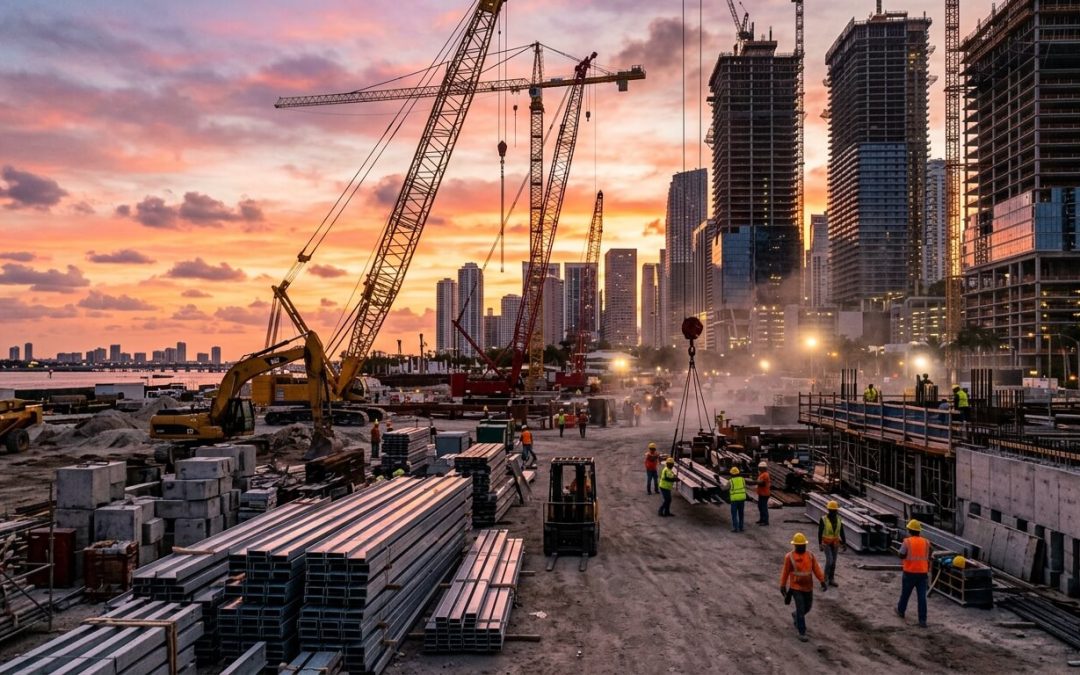
Miami’s construction boom is stretching material lead times due to soaring demand that strains supply chains. Manufacturers and suppliers are struggling to keep up, leading to local labor shortages and delays. The complexity of modern projects further complicates material sourcing. This situation could result in higher costs and extended timelines for your projects. To navigate these challenges, you’ll want to explore various strategies to guarantee timely deliveries and resource allocation, and there’s more to learn about managing these impacts.
Understanding the Construction Boom in Miami
As Miami continues to attract new residents and businesses, the construction boom reshapes its skyline and neighborhoods.
You’ll notice cranes dotting the horizon as developers rush to meet the growing demand for housing and commercial spaces. This surge isn’t just about aesthetics; it’s about creating vibrant communities that cater to a diverse population.
You’ll find high-rise condos, mixed-use developments, and modern office spaces sprouting up, reflecting the city’s dynamic spirit.
This construction rush promises economic growth, job creation, and an enhanced quality of life, but it also raises questions about infrastructure and long-term sustainability in this rapidly evolving urban landscape.
Factors Contributing to Increased Material Lead Times
While the construction boom in Miami brings exciting opportunities, it also leads to increased material lead times that can impact project timelines.
Several factors contribute to this issue. First, the surge in demand strains manufacturers and suppliers, making it harder for them to keep up.
Second, local shortages of skilled labor can slow production rates, leading to delays in material availability.
Finally, the complexity of modern construction projects often requires specialized materials, which can take longer to source.
These interconnected factors create a challenging environment for contractors, pushing timelines and potentially increasing costs for your construction projects.
The Role of Supply Chain Disruptions
Supply chain disruptions play a significant role in exacerbating material lead times during Miami’s construction boom.
As demand surges, you may find that suppliers struggle to keep up, causing delays in deliveries. Inconsistent shipping schedules, labor shortages, and transportation challenges can all push material availability further down the timeline.
When you’re relying on timely supplies, these disruptions can halt projects and inflate costs. It’s imperative to stay informed about global supply chain issues, as they can directly impact your operations.
Ultimately, maneuvering through these disruptions requires adaptability and awareness to mitigate their effects on your construction timelines.
Strategies for Contractors and Developers
To navigate the challenges of Miami’s construction boom, contractors and developers must adopt proactive strategies that address both material shortages and project management inefficiencies.
Start by establishing strong relationships with suppliers to secure priority access to materials.
Utilize technology for real-time tracking of inventory and project timelines, allowing for quick adjustments.
Consider alternative materials or local sourcing to mitigate long lead times.
Regularly communicate with all stakeholders to guarantee everyone’s aligned and informed.
Finally, prioritize workforce training to enhance productivity and adaptability, making sure your team can handle unforeseen challenges efficiently while keeping projects on track.
Future Outlook for Construction Material Availability
As demand for construction projects continues to surge in Miami, the future outlook for material availability remains a critical concern for industry professionals.
You’ll need to stay informed about market trends and potential supply chain disruptions. Anticipating shortages will help you make strategic decisions and avoid project delays.
Collaborating with suppliers and diversifying your sourcing options can also enhance your resilience. Additionally, exploring alternative materials and innovative construction techniques might prove beneficial.
Frequently Asked Questions
How Do Material Lead Times Affect Project Budgets in Miami?
Material lead times can greatly affect your project budgets in Miami.
Delays can lead to increased costs, unexpected expenses, and potential loss of revenue, making it essential to plan and manage timelines effectively for budget control.
What Types of Materials Are Most Impacted by Lead Time Delays?
Concrete, steel, and lumber are most impacted by lead time delays.
You’ll notice that these essential materials often experience shortages, causing project timelines to stretch and budgets to swell beyond your initial estimates.
Are There Specific Construction Methods That Can Mitigate Lead Time Issues?
Yes, using prefabrication, modular construction, and just-in-time delivery can mitigate lead time issues.
These methods streamline processes, reduce on-site construction time, and enhance efficiency, helping you avoid delays and keep your projects on schedule.
How Can Homeowners Navigate Material Shortages for Renovations?
You can navigate material shortages by planning ahead, researching alternative materials, and maintaining flexibility in your choices.
Building a strong relationship with suppliers and contractors can also help you find solutions and expedite your renovation process.
What Role Does Technology Play in Managing Material Lead Times?
Technology streamlines your material ordering process, using real-time data to predict lead times and manage inventory.
It helps you track shipments and communicate with suppliers, ensuring you stay informed and minimize delays in your renovations.
Conclusion
In conclusion, Miami’s construction boom has significantly impacted material lead times, driven by various factors and supply chain disruptions. As a contractor or developer, it’s crucial to stay informed and adapt your strategies accordingly. By anticipating delays and diversifying your suppliers, you can mitigate these challenges. Embracing innovative solutions will help you navigate this dynamic landscape, ensuring your projects stay on track. Keeping an eye on future trends will also position you for success in a competitive market.
