
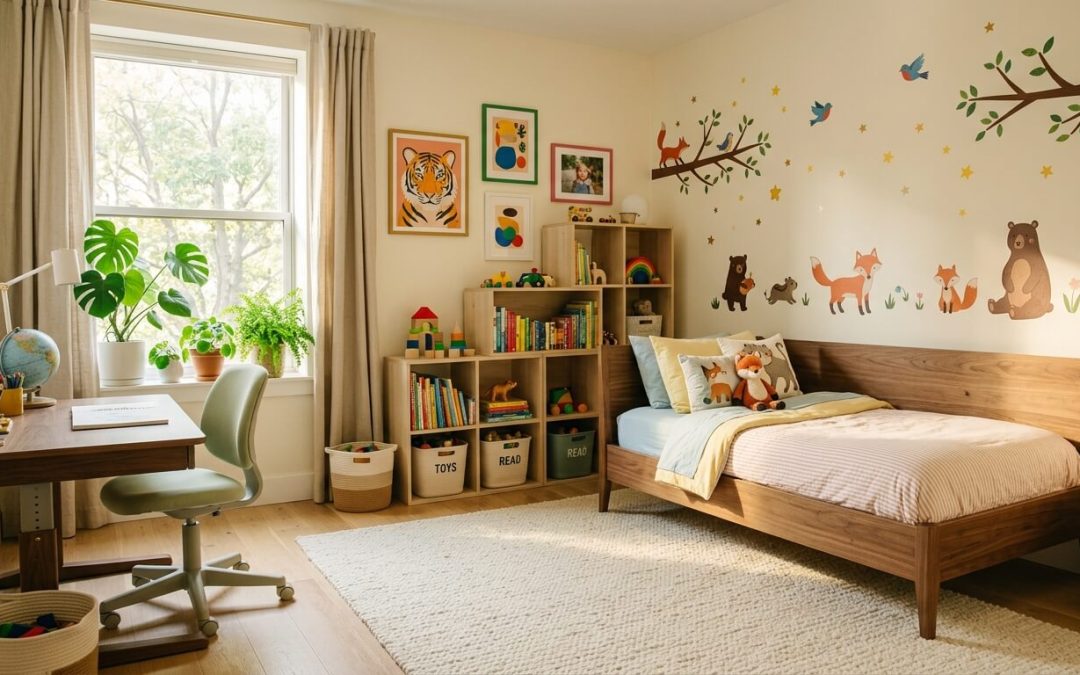
Designing a kids’ room that grows with your child doesn’t have to mean constant renovations. Start by choosing versatile furniture, like convertible cribs and multi-functional desks. Incorporate flexible decor elements such as removable wall decals and interchangeable bedding for easy updates. Create zones for different activities, using rugs to define spaces. Don’t forget smart storage solutions that keep things organized and make room for personalization. There’s so much more you can explore to make their space truly adaptable.
Choosing Versatile Furniture That Adapts
When you’re designing a kids’ room, choosing versatile furniture that adapts to their changing needs is essential.
Look for pieces that can grow with your child, like a convertible crib that turns into a toddler bed. Multi-functional furniture, such as a desk that doubles as a craft table, maximizes space and utility.
Consider storage solutions that can shift from toys to books as your child matures. Opt for adjustable shelving or modular seating that can be rearranged to fit different activities.
With the right choices, you’ll create a harmonious environment that evolves alongside your child, making the most of every square inch.
Incorporating Flexible Decor Elements
Although kids grow quickly, incorporating flexible decor elements can help you create a space that remains stylish and functional over the years.
Think about using removable wall decals or paint in neutral colors, allowing you to easily switch themes as your child’s interests change.
Opt for interchangeable bedding and accessories, like throw pillows or rugs, which can instantly refresh the room’s look.
Use adjustable lighting solutions, like dimmers or multi-functional lamps, to cater to different moods and activities.
Creating Zones for Different Activities
To create a functional and engaging kids’ room, it’s vital to design distinct zones for various activities.
Start by identifying your child’s needs—an area for sleeping, playing, and studying. Use rugs or furniture to define these spaces.
For playtime, consider a soft rug and storage for toys. A desk in a quiet corner encourages focused study sessions, while a cozy reading nook invites relaxation.
Keep in mind your child’s age and interests, allowing these zones to evolve as they grow.
Utilizing Storage Solutions for Easy Organization
Effective organization in a kids’ room often hinges on smart storage solutions.
Start by incorporating multifunctional furniture, like beds with drawers or ottomans that double as storage. Use bins and baskets to keep toys and art supplies tidy, labeling them to make cleanup easy.
Wall-mounted shelves can create vertical storage, freeing up floor space for play. Consider clear containers so kids can see what’s inside, encouraging them to put things back.
Don’t forget about under-bed storage for seasonal items or extra blankets. These solutions help maintain order, making it simpler for your child to find and put away their belongings.
Embracing Personalization to Reflect Interests
After organizing the space with smart storage solutions, it’s time to make the room truly your child’s.
Incorporate their interests to create a personalized haven. Let them choose colors, patterns, and decor that reflect their personality. Display their artwork or favorite photos on the walls. Use themed bedding or accessories that resonate with their hobbies, whether it’s dinosaurs, space, or princesses.
Create a dedicated area for creative activities, like a reading nook or craft station. By embracing personalization, you’ll foster a sense of ownership and pride in their space, making it a room they’ll love for years to come.
Frequently Asked Questions
What Age Range Should I Consider When Designing This Room?
You should consider ages 0 to 18 when designing the room.
This range allows for versatile choices that adapt to your child’s changing needs, interests, and styles as they grow into adolescence and beyond.
How Can I Make the Room Safe for Toddlers and Older Kids?
To make the room safe for toddlers and older kids, make certain outlets are covered, furniture is anchored, and sharp edges are padded.
Choose non-toxic materials and secure heavy items to prevent accidents as they grow.
What Budget Should I Allocate for a Kid’s Room Redesign?
You should allocate around $1,000 to $3,000 for a kid’s room redesign.
This budget allows for quality furniture, decor, and safety features, ensuring a functional and enjoyable space for your child as they grow.
How Often Should I Reassess the Room’s Design as My Child Grows?
You should reassess the room’s design every couple of years or whenever your child expresses new interests.
Kids grow quickly, and adapting to their changing needs keeps the space functional and enjoyable for them.
Are There Specific Themes That Work Well for Different Age Groups?
Yes, themes like animals or nature suit younger kids, while sports or superheroes appeal to older ones.
As they grow, consider their interests; flexible decor allows easy updates without major renovations as tastes change.
Conclusion
By focusing on versatile furniture, flexible decor, and designated activity zones, you can create a kids’ room that truly grows with your child. Incorporate smart storage solutions to keep everything organized and encourage personalization to reflect their evolving interests. This way, you’ll minimize the need for constant renovations, making the space both functional and fun. Embrace these strategies, and you’ll have a room that adapts beautifully as your child grows, ensuring it remains a cherished space for years to come.
