
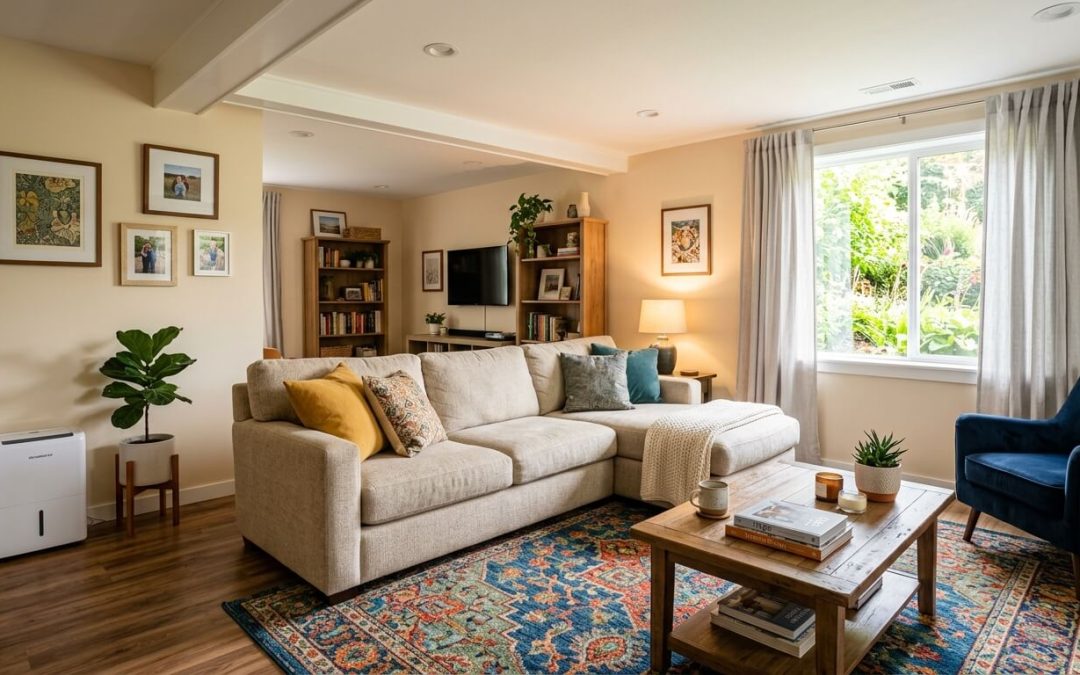
To convert your damp basement into a fully usable living space safely, start by identifying and fixing moisture issues, like water stains or leaks. Use waterproofing solutions, such as sealants and sump pumps, to keep water out. Guarantee proper ventilation to maintain air quality, and choose durable, moisture-resistant materials for finishing. Design your space for comfort and usability with functional furniture and good lighting. There’s more to explore on how to achieve a beautiful, dry basement.
Assessing Moisture Issues and Identifying Sources
Before you can tackle a damp basement, you need to assess the moisture issues and identify their sources.
Start by checking for visible signs of dampness, like water stains or mold growth. Pay attention to the walls, floors, and corners.
Next, look at the exterior drainage system—clogged gutters or downspouts can lead to water pooling near your foundation.
Inspect your basement windows for leaks and verify they’re properly sealed.
Don’t forget to evaluate the soil around your foundation; it should slope away to prevent water intrusion.
Identifying these issues is essential for effective remediation and future prevention.
Implementing Effective Waterproofing Solutions
Once you’ve identified the sources of moisture in your basement, it’s time to implement effective waterproofing solutions.
Start by sealing cracks in walls and floors with a high-quality epoxy or polyurethane sealant. Next, consider installing a sump pump to manage water accumulation.
You should also apply a waterproofing membrane on basement walls for added protection. If exterior drainage is an issue, make certain gutters and downspouts direct water away from your foundation.
Finally, don’t overlook the importance of proper grading around your home to prevent water pooling. These steps will help keep your basement dry and ready for transformation.
Ensuring Proper Ventilation and Air Quality
While waterproofing your basement is essential, ensuring proper ventilation and air quality is equally important to create a healthy environment.
Start by installing vents or windows to promote airflow. Consider using exhaust fans to remove humidity and stale air. An energy recovery ventilator (ERV) can also be a great investment, as it exchanges indoor air with fresh outdoor air while maintaining temperature.
Additionally, monitor humidity levels with a hygrometer; aim for 30-50%. Using air purifiers can help eliminate dust and allergens.
Regularly check for mold, and address any moisture issues immediately to maintain a safe, livable space.
Choosing Safe and Durable Materials for Finishing
When you’re ready to finish your basement, choosing safe and durable materials is essential for both aesthetics and longevity.
Start with moisture-resistant drywall or cement board to prevent mold. Opt for non-toxic paints and finishes to enhance air quality.
For flooring, consider vinyl or tile, as they withstand humidity better than wood. Insulation should be moisture-resistant, like closed-cell spray foam.
Don’t forget about durable fixtures and furnishings that can handle damp conditions.
Designing the Space for Maximum Usability and Comfort
As you plan your basement layout, focusing on usability and comfort is key to creating a welcoming environment.
Consider how you’ll use the space—whether it’s a cozy family room, a home office, or a play area. Choose furniture that’s not only stylish but also functional, like multi-purpose pieces that save space.
Guarantee adequate lighting with a mix of ambient and task options to enhance the mood. Incorporate soft textiles, such as rugs and curtains, to add warmth.
Finally, don’t forget about airflow; good ventilation keeps the space fresh and inviting, making it a pleasant retreat for everyone.
Frequently Asked Questions
How Long Does Waterproofing Typically Last Before Needing Maintenance?
Waterproofing typically lasts around 10 to 20 years, depending on materials and conditions.
You should regularly inspect your basement for any signs of moisture or damage, so you can address issues before they worsen.
Can I Use Regular Paint on Basement Walls?
No, you shouldn’t use regular paint on basement walls.
It won’t hold up against moisture.
Instead, opt for waterproof or mold-resistant paint specifically designed for damp environments to guarantee durability and protection.
What Are the Best Plants for a Basement Environment?
For a basement environment, consider low-light plants like snake plants, pothos, or peace lilies.
They thrive in humidity and low light, making them perfect choices to enhance your space while improving air quality.
How Can I Prevent Mold After Finishing My Basement?
To prevent mold after finishing your basement, guarantee proper ventilation, use moisture-resistant materials, maintain humidity levels below 60%, and regularly inspect for leaks.
You can also install a dehumidifier for added protection.
Is a Dehumidifier Necessary in a Finished Basement?
Yes, a dehumidifier’s essential in a finished basement.
It helps control humidity levels, preventing mold growth and maintaining air quality.
You’ll create a more comfortable and healthier environment for you and your family to enjoy.
Conclusion
Converting your damp basement into a usable living space can be an exciting project. By assessing moisture issues, implementing waterproofing solutions, and ensuring proper ventilation, you’ll create a safe and comfortable environment. Choosing durable materials not only enhances the aesthetics but also stands up to potential moisture challenges. With thoughtful design, you can maximize usability and transform your basement into a welcoming area for relaxation or entertainment. Dive in and watch your vision come to life!
